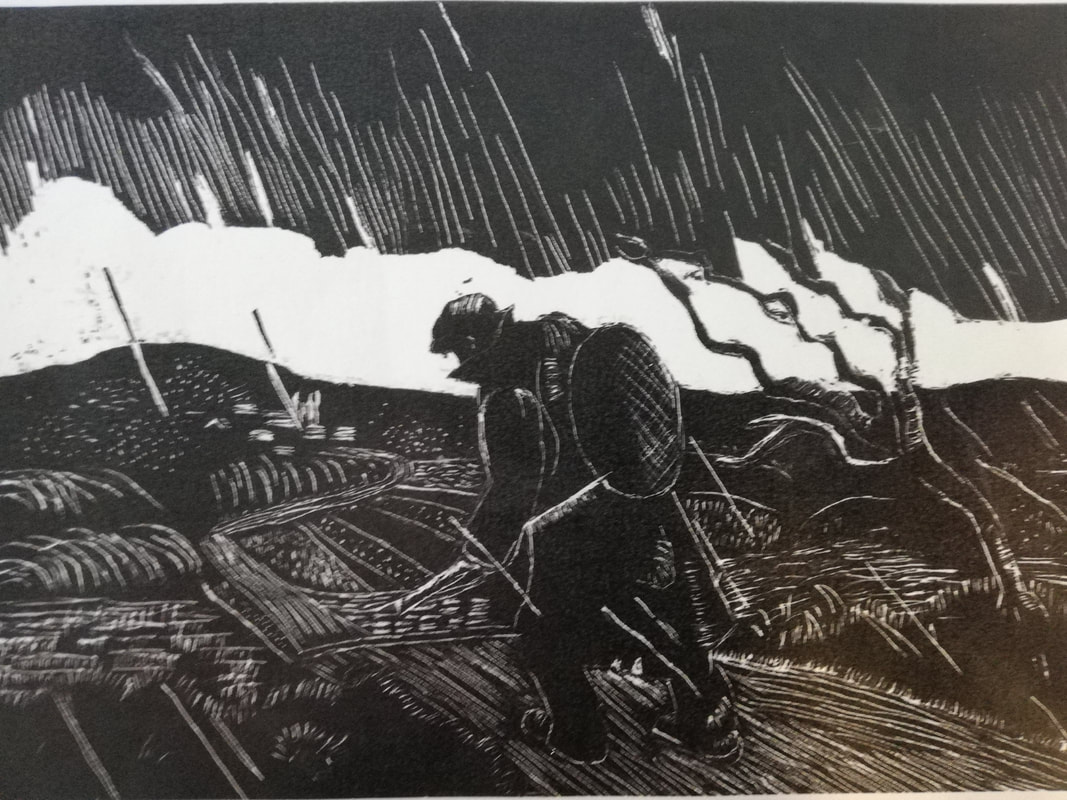
 This image was made by Clare Leighton, This one I preferred a lot more than the other two, I might of scraped too hard in some places but out of the three, I both enjoyed doing this forgery and I most accurate to the image I personally think.
The most tedious part was scraping all the white from the sky, but like the rest of them, I was rushing them when I should not have done, I need to practice not rushing my work and take my time with everything I do.
0 Comments
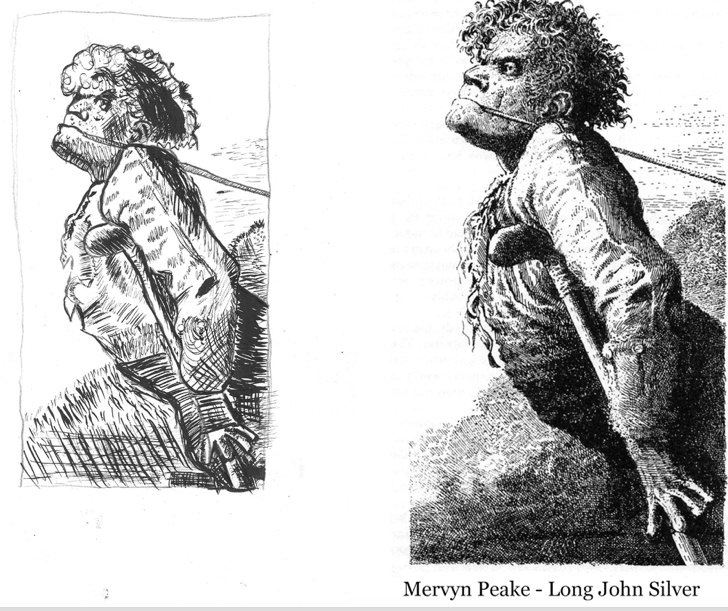 This image was based on one of the characters from the classic story Treasure Island. At first I was a bit hesitant with pen and ink, I won't deny, if I was given a chance to do it again I would, but overall, I'm pleased with the outcome, I worked to quickly with it so I need to slow down with all my work.
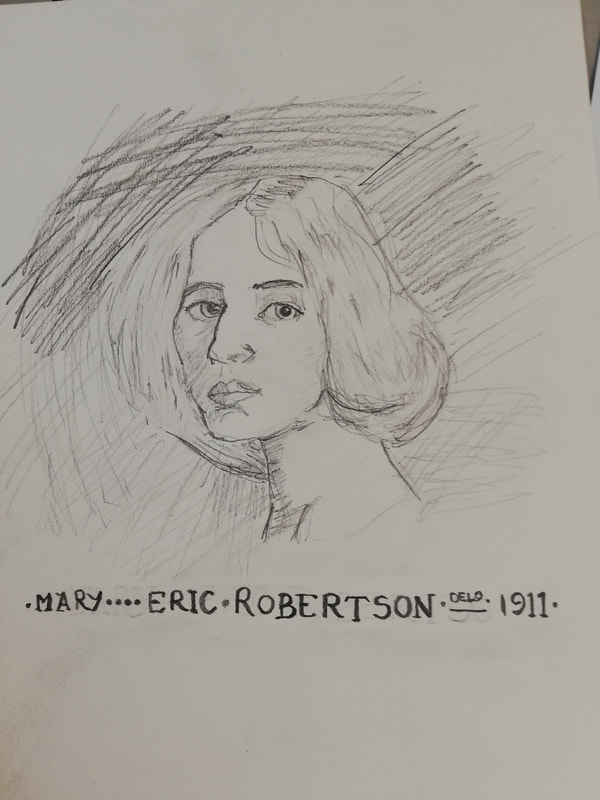 For three of my tasks, I was asked to make forgeries of the chosen images using three different materials; pencil, ink and pen and scraper board.
The first image I had to forged was called Mary by Eric Robertson, The image is of a young woman and Eric Robertson used a pencil to draw her with. My image shows that I'm trying to draw the same image, however mines was done too quickly, and looks like very stylised, it also doesn't show off her face as well. This was final drawing, I did do another version, however it doesn't look any better, this image was the best out of the two. Wassily Wassilyevich Kandinsky was a Russian artist and art theorist born in December 4th 1866 in Moscow, Russia. He married his cousin Anna Chimyakina, he then got divorced with Anna in 1903 and years later married Nina Andreievskaya in 1917 and stayed married till Kandinsky died in 1944 at the age of 77. Kandinsky graduated at Grekov Odessa Art School in Ukraine, he also enrolled to study law and economics at the University of Moscow.
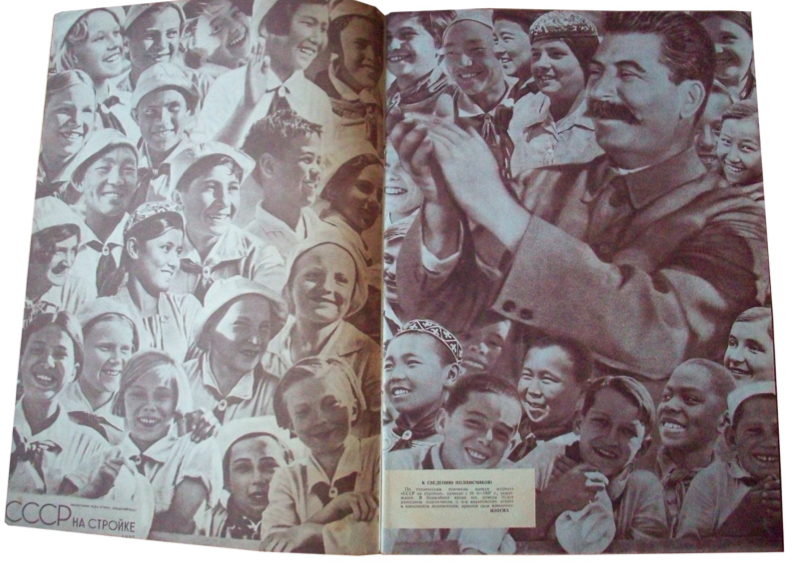
In 1896, Kandinsky decided to give up on dream as a lawyer and moved to Munich, at the time, it was seen as the most popular place to be for European Art, he met a Yugoslavian artist by the name Anton Azbe. Azbe had his own private painting school, were Kandinsky learnt about composition and with line and form. However, this did not satisfy Kandinsky, so he enrolled into Munich Academy of Arts. In 1922, During his time in Munich he met a young artist called Gabriela Munter, The World War began and both of them were forced to leave Germany so Kandinsky and Munter moved to Switzerland, where Kandinsky wrote the book called "point and line". Not long after Munter and Kandinsky had to go their separate ways, Munter went back to Munch and Kandinsky moved back to Moscow, where he met his wife Nina. The founder of the Bauhaus, Walter Gropius, sends an invitation to Kandinsky to teach at the Bauhaus in Weimar Germany , he taught basic design for beginners, painting classes and a workshop where he expanded his colour theory with new forms of psychology. Kandinsky up to the very end had not doubted his "inner world", the world of images where the abstraction was not an end in itself, and the language of forms was not "deadborn"; they arose from will to pithiness and vitality. The two I have chosen to depict are both from Russia, the first image is a picture of the former dictator Josef Stalin surrounded by children cheering and clapping, this source is from a magazine in the time he was the leader of the Soviet Union. This image is monochromatic, not alot of text about the image and the image of Josef Stalin covers half the page to make him stand out from the crowd, This image would have been used for propaganda to show his more human side in politics.
The second image is a poster from 1925 made by Stenberg Bros called Battleship Potemkin. After watching "Mark Kermodes reviews Eisenstein's Battleship Potemkin" based on true events, the film is based on a mutiny revolting against their commanding officers, seen as one of the greatest movie of all time. The poster having the colours of red, white and blue which would be coincidence as it's the Russian flag now is also red, white and blue, for at the time it would have been soviet red. The image also shows two sailors; one with a sailors uniform on and the other wearing a captain's uniform, the captain in the image shows that he is falling, which I think ties into the plot of the story. Art Nouveau is mixture between architecture and applied art, Art Nouveau has a fluorescent style but in different cities around the world they also add their own style to it. For example, in Glasgow, their buildings on the outside tend to be very squared and boxed but on the inside they is a lot more finesse to their rooms, one of them being the Willow Tea Rooms, inspired by the artist Charles Rennie Mackintosh, the rooms remind me of a more modern Japanese style of interior furniture. However in places like Vienna, the outside of their building is where the have their gothic architecture with the Art Nouveau, the buildings are more floral and vibrant than the buildings in Glasgow and the buildings have more intricacy and detail in them especially the roofs. Otto Wagner created the wall art on the Majolika Haus in Vienna, the building itself is quite simple but the front of the building is the beautiful artwork that he created.
Many of famous artist from the 19th century have been influenced by Japanese art, for example, French artist Claude Monet in 1899 painted a piece called "Water Lilies and Japanese Bridge" which has some similarities to Hokusai's "Under Mannen Bridge at Fukagawa" which was made in 1823. Both pieces have the one similarity and that's the bridge, Monet's bridge is very small and peaceful compared Hokusai's large and a lot more seems to be happening. Another example is by Danish-French artist Camille Pissarro, an8d his piece called "Boulevard Montmartre" (1897), This piece was influenced by Hiroshige and his piece "Sugura street", both pieces are based on a road were there are a lot of people, in Pissarro's he has added a more modern theme to his piece like vehicles and street lamps and with Hiroshige's piece is that his is more towards his cultural being.
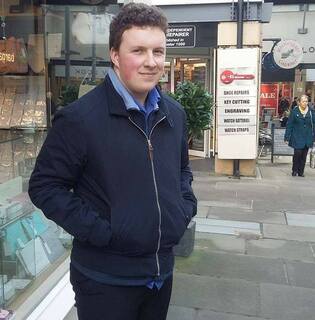 The Harrington Jacket was originally made in the 1930s by a British company called Baracuta, the jackets are very light weighted, at the waist and they are one of a few jackets that can be a all round seasonal. The materials to make a Harrington jacket is made out of polyester, cotton, wool and suede, and the jacket is known for the traditional tartan lining and the flap pockets, I really like the funnel like collar. What makes a Harrington so popular is that it can work with a lot of different items of clothing, I personally like a plain black T-shirt and some jeans with my Harrington jacket. These jackets go for on the Baracuta website for £300 to £400, Unfortunately my Harrington is worth about £20 from Primark, not worth quite as much. However, due to its style and its make it does count as a Harrington, just not a very good one. Many people can wear the Harrington jacket in different styles, for example James Dean wore his collar upwards in the film "Rebel Without A Cause" , Steve McQueen wore his collar down as it was originally made as, but my personal favourite is like Joe Strummer from the Clash with the sleeves rolled up. The Harrington jacket was brought back in the 1960s when Ska became a popular music genre in the UK, most popular with skinheads. What I find really interesting about the Harrington Jacket is how everyday and simple the jacket is, and how it also adds style to my clothes that I wear everyday.
|
AuthorWrite something about yourself. No need to be fancy, just an overview. Archives
February 2020
Categories |





 RSS Feed